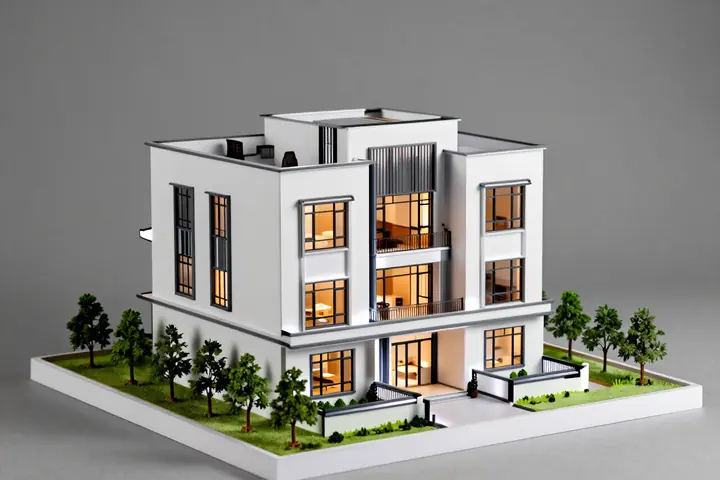
Why the brief matters more than the price
A model maker can only quote accurately against a clear scope. A vague brief produces vague prices, hidden assumptions and disappointment later. The goal of a brief is to let every maker price the same thing — so you can compare like with like.
You do not need every detail finalised before enquiring. An early-stage brief is welcome. But the more specific you can be, the more useful the responses will be.
The essential information to include
Purpose and audience: what the model must communicate and who will view it.
Category: architectural, township, industrial, interior, exhibition, engineering, working demonstration, or 3D-printed components.
Overall dimensions and footprint.
Scale, if known — if not, the maker can advise based on the purpose.
Drawings, elevations and reference renders you are authorised to share.
Finish expectations: facade materials, landscape, signage.
Lighting or moving features, if any.
Budget range, even approximate.
Destination and required date, including any installation needs.
Decisions that change the price
Several choices have a large effect on cost and timeline:
Scale: a larger scale shows more detail but takes more time and material.
Detail level: conceptual, presentation detail, or detailed technical.
Cutaway or open sides: removable roofs and walls add fabrication work.
Lighting: integrated lighting increases complexity and cost.
Moving or working features: mechanisms change the sourcing needs entirely.
Base and enclosure: protective covers, transport crates and modular bases.
State these explicitly so makers do not assume them differently.
What to ask makers to state in return
When proposals arrive, ask each maker to state inclusions, exclusions, assumptions, material choices, base and enclosure details, transport, installation, maintenance and delivery terms.
Request relevant examples. Assess suitability yourself. Vistar Models does not verify or approve makers — that judgement is yours.
Agree before making
Before production begins, record the final scope, milestones, change process, acceptance criteria, payment schedule and delivery arrangements directly with the selected maker.
Any Vistar quotation coordination or project coordination is separately agreed. Submitting a form does not place an order or create a payment obligation.