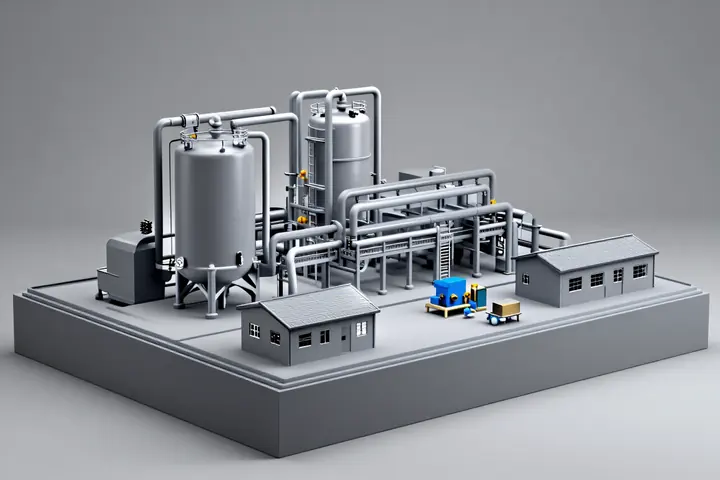
What drives the timeline
A model’s production time depends on several factors, most of which you can influence through the brief:
Detail level: detailed technical models take longer than conceptual massing studies.
Scale: larger scales show more detail but require more fabrication time.
Materials and finish: bespoke finishes and facade materials add steps.
Lighting and moving features: integrated systems add design and assembly time.
Base, enclosure and transport: modular bases and protective crates take additional work.
The maker’s current capacity: even a capable maker may be booked. A suitable match may not always be available.
What drives the budget
The same factors drive cost. There is no universal price for “a scale model” because the scope varies so widely. Makers set their own prices, assumptions and commercial terms.
Stating an approximate budget range — even a wide one — helps a maker propose a realistic scope rather than a maximum-specification quote.
Set expectations early
Share your required date and budget range as early as possible. If the date is fixed by an exhibition or presentation, say so. If the budget is constrained, a maker can suggest where to reduce detail without losing the model’s purpose.
Be honest about what is essential and what is flexible. That honesty produces more useful proposals.
Agree scope before production
Before any making begins, record the final scope, milestones, change process, acceptance criteria, payment schedule and delivery terms directly with the maker. Changes after production starts are usually more expensive than decisions made in the brief.
Any Vistar quotation coordination or project coordination is separately agreed. Submitting a form does not place an order or create a payment obligation.
What Vistar does not promise
Vistar Models does not guarantee a match, quality, price, delivery date or maker performance. We help clarify the scope and consider potentially suitable makers. The commercial agreement is between you and the maker.